Cyngor Llyfrau Cymru
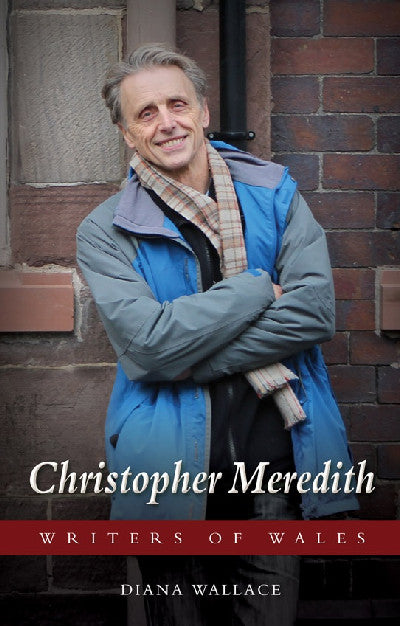
Writers of Wales: Christopher Meredith
Writers of Wales: Christopher Meredith
Couldn't load pickup availability
Disgrifiad Cymraeg / Welsh Description
Yr astudiaeth feirniadol, lawn, gyntaf o ffuglen a barddoniaeth Christopher Meredith, awdur pedair nofel yn cynnwys Shifts (1988) am y Gymru ôl-ddiwydiannol a'r nofel hanesyddol Griffri (1991) ynghyd â phedair cyfrol o farddoniaeth.
Disgrifiad Saesneg / English Description
This book is the first full-length critical study of the fiction and poetry of Christopher Meredith. The author of Shifts (1988), the classic novel of post-industrial Wales, Meredith has also written three other novels, including the historical Griffri (1991) and four volumes of poetry.
Dosbarthu
Byddwn yn dosbarthu eitemau sydd mewn stoc o fewn 3 diwrnod gwaith, fel arfer drwy Royal Mail Tracked 48. Ar gyfer archebion o flaen llaw, byddwn yn dosbarthu’r eitem o fewn 3 diwrnod gwaith ar ôl ei derbyn gan ein cyflenwr.
Dispatch
In-stock items will be dispatched within 3 business days, usually by Royal Mail Tracked 48. For pre-orders, we’ll dispatch within 3 business days of receiving the item from our supplier.
Manylion y cynnyrch / Product details
- ISBN 13
- 9781786831149
- Gwales Code
- gwales.com.9781786831149
- Gwerthwr / Vendor
- Cyngor Llyfrau Cymru
- Long Title
- Writers of Wales: Christopher Meredith
- Awdur / Author
- Wallace, Diana
- Current Price ex VAT
- £9.99
- Current Price inc VAT
- £9.99
- Availability Status (EN)
- Available
- Availability Status (CY)
- Ar gael
- Dyddiad cyhoeddi / Publication Date
- 2018-05-10
- Cyhoeddwr / Publisher
- Gwasg Prifysgol Cymru / University of Wales Press
- Media Type (EN)
- Paperback / softback
- Media Type (CY)
- Clawr meddal
- Pages
- 224 pages
- Size
- 138 × 216 mm
- Language Code
- English
- Categori / Category
- CY: Ysgrifau a Sgyrsiau (yn Saesneg) | EN: Essays and Talks (in English)
Adolygiad y Cyhoeddwr / Publisher Review
This new volume in the Writers of Wales series is the first critically to assess Christopher Meredith’s literary oeuvre as a whole, and the result is richly rewarding. The success of his first novel, Shifts (1988), which quickly established itself as a modern classic, becoming ‘an automatic choice on most courses on Welsh literature in English’ according to Stephen Knight, to some extent distorted critical responses to Meredith’s later fictions and to his poetry generally. The timeliness of its in-depth exploration of the processes of deindustrialisation in south-east Wales meant that Shifts filled an immediate need for its post-1984 audience, helping them to grasp what was involved in the momentous ‘shift’ they were living through. But readers who seized on that work as realist post-industrial fiction lost sight of its experimental use of symbolism, a feature of Meredith’s work as a whole, Wallace argues. All his writings, she suggests, aim at exploring through art and its imagery the nature of communal experiences, located as they are in specific geographical places, always moving through historical change. Meredith’s poems and novels echo one another as they focus on such issues as the nature of time, the experience of colonisation, and the changing patterns of class and gender construction. In order to highlight these echoes, the book reads Meredith’s fiction and poetry collections in close parallel connection with one another. After an introductory chapter locating the oeuvre in its place, that is, in Meredith’s natal community of Tredegar in Blaenau Gwent, the second chapter deals with his first poetry collection This (1984) and Shifts (1988), reading both as predominantly concerned with the attempt to find one’s place within the shifting world of the collapse of the heavy industries. The third chapter sets Meredith’s historical novel Griffri (1991), located in twelfth-century Gwent, alongside Snaring Heaven (1990) with its many 1980s political poems, and explores in particular the question raised in both texts of art’s potential complicity with dehumanising power structures. The theme of historical epochs echoing one another is followed through in chapter four with its focus on the teaching of history in the contemporary Gwent schoolroom in the novel Sidereal Time (1998), paralleled by the many poems in the collection The Meaning of Flight (2005) which also set historical epochs in the context of space time, or layer them evocatively. Chapter five interrogates The Book of Idiots (2012), a novel primarily concerned with masculinity in crisis, as male identities formed under industrial work conditions flounder in the ‘affectless twenty-first century of contentless-jobs’. On an edge between two worlds, its characters’ plight is echoed in the predominant themes of Meredith’s last poetry collection to date, Air Histories (2013), which focuses on the geographical borderland of the Black Mountains, edging the post-industrial valleys. ‘Edges are where meaning happens’ reads a line from the poem ‘Borderlands’ in Air Histories . A sustained meditation on the meaning of life in one geographical place set in changing times, Meredith’s oeuvre is convincingly represented in this study as that of ‘a novelist-poet grounded in his place whose work addresses universal themes precisely because of its location in an intimately rendered geographical and historical specificity’.‘Wallace’s detailed discussions of both poetry and fiction will be indispensable for future exploration of the author’s work’, writes Tony Brown in a recent review of this book in the New Welsh Review, and one cannot but agree.
Share